
Read Turner County's Current Owner Card
The assessor's parcel card ties each owner name to current assessment data for Turner County. Think of it as the working record. The county posts this card through QPublic. The platform's own notice describes the data as a work in progress. Because of that, treat anything you pull as a snapshot. Check it against the newest recorded deed. The vesting language in that deed, not the card, settles who truly holds title. Start at the official Turner QPublic landing page to open the parcel card. Do that before recording any owner fields.
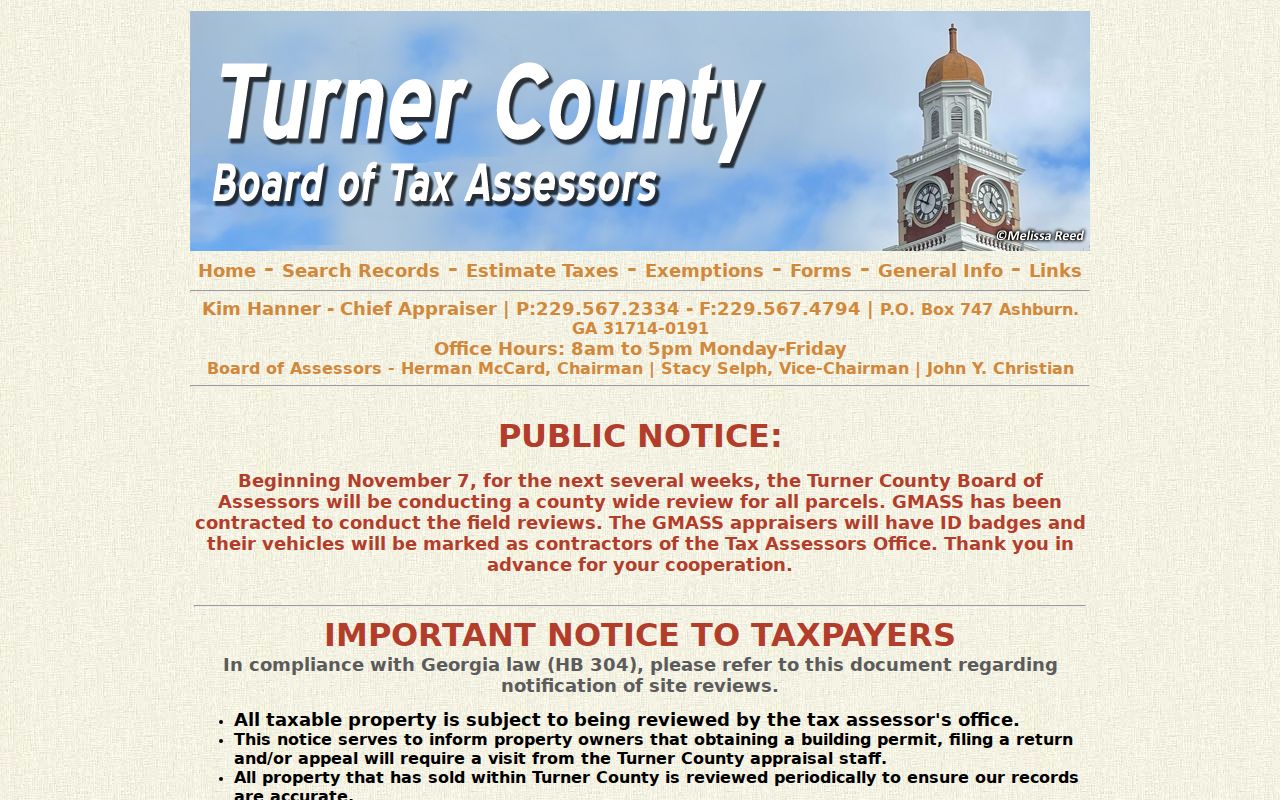
The landing page connects you straight to the assessor's live parcel card. To gauge how current the owner line is, compare it with the newest filing in the Clerk's real-estate index.
| Owner name | Assessor name to compare with the newest deed grantee |
|---|---|
| Parcel key | Cross-system key copied exactly from the Turner card |
| Mailing address | Tax-notice destination, not proof of residence |
| Site address | Property locator, not the legal description |
| Legal summary | Short land description to match against the deed |
| Source date | Clue to whether a recent transfer may be missing |
That owner line is not proof someone lives there. It may name an LLC, a trust, an estate, or several co-owners. The mailing address can sit in another state entirely. A tax notice tells you where the bill goes, not who holds legal title. In Turner County, ownership proof comes from the recorded deed and its vesting language alone. Rely on deed records for the true owner of record.
Confirm Turner County Ownership Now
Use the card to spot the likely current owner first. Then test that name against the recording sequence, since a deed recorded after the card's last update can change everything. GSCCCA's Turner real-estate index can lag slightly behind the Clerk's docket, so for a same-day or very recent filing, the Clerk of Superior Court remains the definitive source.
- Open Turner QPublic and save the current owner name, parcel key, both addresses, and legal summary.
- Search the owner as grantee in the GSCCCA real-estate index. Inspect later deeds and correction instruments.
- Match the deed's Turner County legal description and prior book/page to the card. Use the recording date to rank competing records.
- For a new filing outside the online good-through date, call the Clerk at (229) 567-2011 or inspect the deed room.
- Owner of record
- The party named by the official record at the date checked.
- Vesting
- The deed text that says who holds title and in what stated form.
- Registered agent
- The listed contact for a Georgia entity, not automatically the landowner.
Date Turner County Owner Evidence
A name is only as current as the newest recording. The newest scan date means nothing on its own. The Turner GSCCCA real-estate index reaches back to 1989. It lags recording by only a few days. A deed signed first can still rank later if another instrument reached the recorder first. So always pull the instrument date, recording date, deed type, grantor, grantee, and book and page together with the image. A correction deed can change a name without any sale. A security deed and its cancellation speak to debt, not to who holds fee ownership.
Verify Turner County Entity Owners
The deed name rules when the owner of record is an LLC or corporation. Type it exactly as written. Then run it through the Georgia Secretary of State business search by business name or control number. Note the status, registered agent, and listed officers. Those people are contact leads, not grantees. A trust may name a trustee, and an estate transfer may name an executor or administrator, while the Turner Probate Court holds the authority record behind the transfer. The recorded deed still supplies the land conveyance.
Check Turner County GIS Names
The county's ArcGIS parcel service carries fields such as Name, lastname, GISParcel, and parcel_no. Its ownership attribution is thin. A name drawn from that layer should never displace the assessor card or the deed. Use the GIS map for shape and location. Then copy the QPublic parcel key and read the newest recorded deed for Turner County. For boundary questions, a plat and survey beat an owner label stretched over a polygon.
Check Turner County Address Labels
A mailing city proves nothing about municipal boundaries. Turner County parcels can carry Ashburn, Rebecca, or Sycamore postal labels. Many sit outside those city limits. Keep both the site address and the mailing address. Then match the legal description instead of trusting the ZIP. Historic and rural Turner County deeds often describe land by roads, land lots, creeks, or acreage. Some also cite a prior book and page. That habit is why a parcel number plus the deed description beats address text. It is the surest way to find the current owner.
Honor Turner County Owner Privacy
Some Turner County owners qualify for address shielding. Georgia Safe at Home lets participants swap a substitute address into public records. VoteSafe does similar work for voter residence addresses. A masked address is privacy protection, not missing data. Respect the shield rather than trying to rebuild the real location from other sources.
Pull only the public facts you truly need. Use them to match a parcel to its owner of record. Georgia's Open Records Act permits redaction where other confidentiality laws require it. When an office withholds part of a mixed record, ask which portion stays public. Also ask which statute supports the redaction.
Contact a Turner County Property Owner
The assessor's mailing address is the official route for tax notices. It can also be a lawful way to send a property-specific letter in Turner County. Never assume the owner of record lives at the mailing or site address. An entity can own land, too. Route that correspondence through the registered office or agent the state lists when it fits the situation.
Lawful use. Turner County owner records support legitimate property matters. Never use a public name or address to stalk, harass, threaten, or evade privacy protections.
What if the assessor card and the deed disagree? Take card questions to the Tax Assessor. Take instrument questions to the Clerk of Court. The broader Turner County ownership method shows how these two custodians split the work of property records.
Log Turner County Owner Proof
An owner conclusion should hold up under repetition. Log the QPublic details first. These include the source date, parcel number, site address, the assessor's owner text, and the legal summary. Save the deed facts as well. That means the grantee, grantor, instrument type, signed date, recording date, book and page, and image source. Keep the live GSCCCA good-through date from the day of the search.
This evidence log makes any later update easy to spot. It also shows why one name was chosen. That matters when a correction, estate transfer, or delayed assessor refresh left two systems disagreeing. Never merge those records silently. Record the mismatch. Then direct the question to the office that maintains the disputed field.
The Assessor can correct a parcel card field. The Clerk handles index and recorded-instrument questions. Neither office should be asked to alter the other's record. A dated note from each custodian keeps the current owner conclusion clear. That clarity holds until the systems align.
Check Turner County Filing Timing
An owner conclusion depends on its slowest source. The Turner County GSCCCA good-through report shows real-estate coverage beginning January 1, 1989 and extending through September 1, 2026. A four-day transmission lag sits behind that endpoint. The statewide name-search screen shows a different one. Save the county-specific report with the search. A deed the Clerk accepted can exist before its statewide index row appears.
Timing matters most after a recent closing or estate transfer. Call the Clerk at (229) 567-2011, give the parties, the approximate filing date, and the property description, and ask whether the named instrument has been recorded. Then ask the Assessor a separate question. Has the parcel card been updated? Recording establishes the public conveyance, while the assessment roll may follow its own schedule.
Owners can also register name variants with the free GSCCCA Filing Activity Notification System. FANS sends forward-looking alerts for matching real-estate, lien, and plat filings in participating counties. It cannot block a filing or reconstruct older ownership, and it cannot judge whether an instrument is valid. Treat an alert as a prompt. Pull the recorded image, then contact the Clerk. That distinction keeps a preventive monitoring tool from being mistaken for proof of today's Turner County owner of record.
When the assessor and deed disagree, preserve both dates. Ask each custodian about its own record. A delayed roll update is not proof that the deed failed, and an indexed filing is not proof that every assessment field has changed.